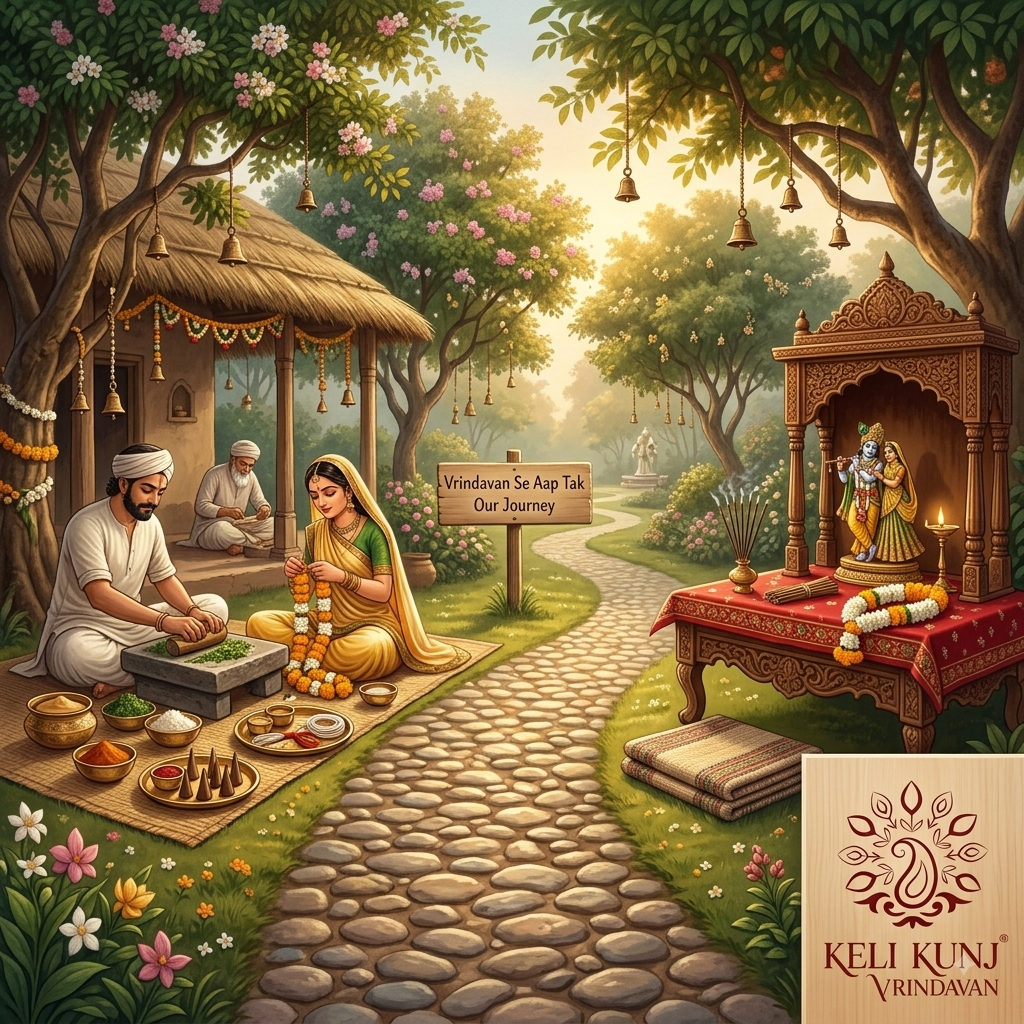
Vrindavan Se Aap Tak — Our Journey of Making Authentic Puja Products
Our Story — Vrindavan Se Aap Tak | Keli Kunj Vrindavan Meta Description: From a small workshop in Vrindavan to homes across India, USA, Australia and Canada — the story behind Keli Kunj Vrindavan’s puja products and the people who make them.
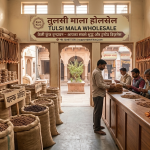
If you’ve ever walked through the narrow lanes near Gaur Udyog Kendra in Mathura early in the morning, you’ll see something most visitors to Vrindavan never notice — the quiet, unglamorous work that happens long before a dhoop stick, an attar bottle, or a poshak ever reaches a puja thali. Rows of dhoop being hand-rolled and laid out to dry. Attar being slow-distilled the traditional Bhapka way, sometimes taking days for a single batch. Poshaks being stitched, one at a time, by hands that have been doing this work for years. This is where Keli Kunj Vrindavan actually begins — not in a warehouse, but in workshops like these.
We wanted to write this post not to sell anything, but simply to explain why we do things the way we do — and why “authentic” isn’t a word we use lightly.
Where It Started
Keli Kunj Vrindavan started with a simple observation: as more devotees moved away from Vrindavan and Mathura — to other Indian cities, and increasingly to the USA, Australia, and Canada — it became harder for them to find puja products that actually felt like they came from Braj. Mass-produced agarbatti with synthetic fragrance. Attar cut with alcohol and sold under traditional-sounding names. Poshaks stitched without any real understanding of seva traditions.
We started as a small operation rooted in Vrindavan itself, working directly with the same kind of artisans, dhoop-makers, and attar distillers who have supplied local temples and Vrindavan households for generations. The goal was never to become the biggest name in spiritual products — it was to make sure that a devotee in Melbourne or Toronto could open a package and feel, even for a moment, like a small piece of Vrindavan had reached them.
What “Authentic” Actually Means to Us
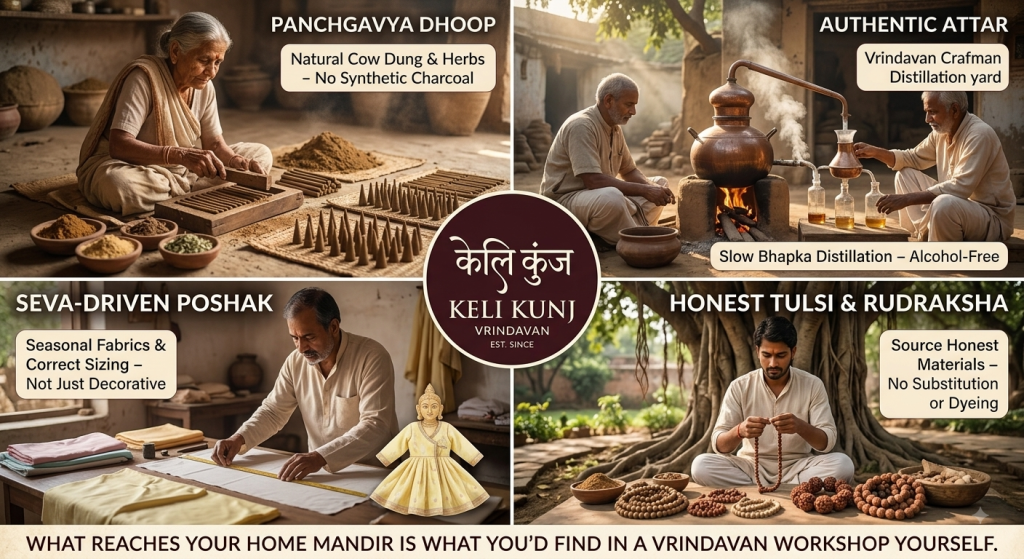
It’s an overused word in this industry, so we try to hold ourselves to specifics rather than just the claim:
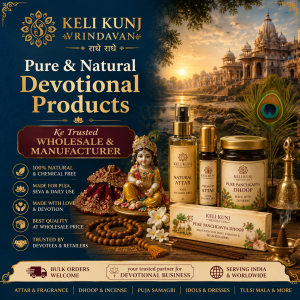
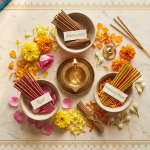
Panchgavya dhoop made with cow dung, chandan, and traditional herbs — not synthetic charcoal-based sticks dressed up with strong perfume to mask a weaker base.
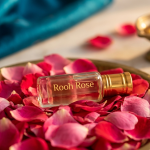
Attar distilled the Bhapka way, without alcohol, the same slow process used in Vrindavan and Kannauj for centuries, even though it takes far longer than simply mixing fragrance oils into a base.
Poshaks stitched with an understanding of seva — sized correctly for specific murti forms, made from fabrics appropriate to the season, not just decorative pieces.
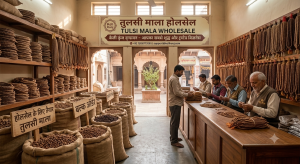
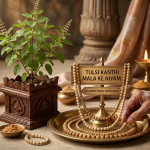
Tulsi malas and rudraksha sourced honestly, without the substitution or dyeing shortcuts that have unfortunately become common in this market.
None of this makes us the cheapest option, and we’re honest about that. It does mean that what reaches your home mandir is close to what you’d actually find if you walked into a workshop in Vrindavan yourself.
The People Behind It
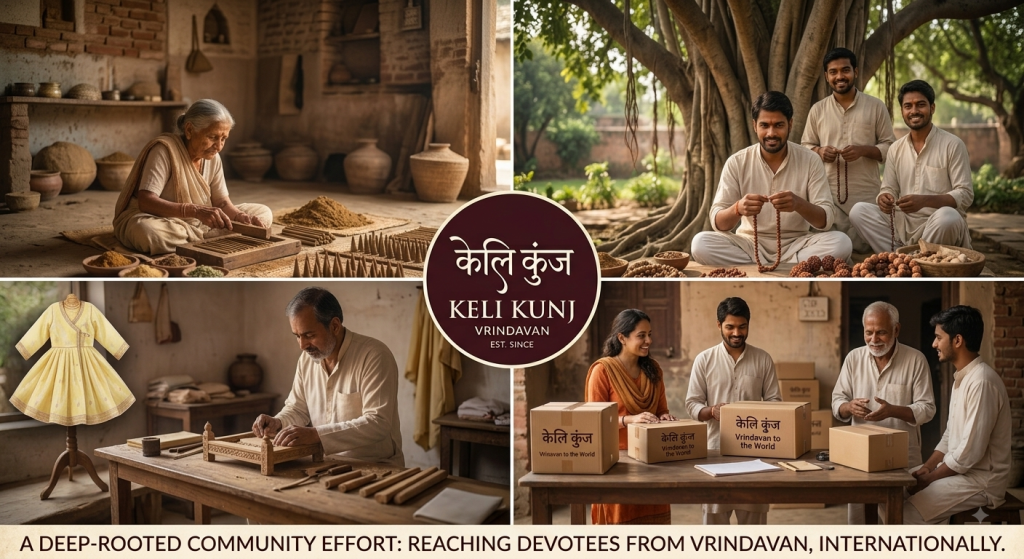
This is genuinely a family-and-community effort. Our manufacturing unit in Gaur Udyog Kendra works closely with dhoop-makers and artisans from in and around Mathura and Vrindavan — many of whom have been doing this work for one or two generations already. When we expanded into poshak and singhasan making, we made a point of working with karigars who already had deep experience with deity dressing and woodwork, rather than treating it as just another product line.
As the business has grown — from serving Vrindavan and nearby pilgrimage towns to shipping across India and now internationally — we’ve tried to keep this part unchanged. Growth, for us, has meant reaching more devotees, not cutting corners to get there.
Going Beyond Vrindavan
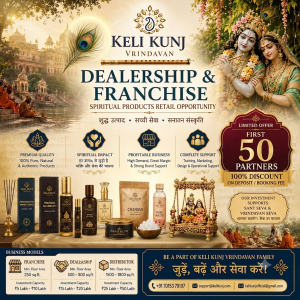
In the last couple of years, we’ve focused on making these products genuinely accessible to devotees living outside India — particularly across the USA, Australia, and Canada, where we know many families want to maintain their home puja traditions but have struggled to find products that feel authentic rather than mass-produced. Alongside this, we’ve also been building a franchise and dealership model, with the hope of bringing Keli Kunj closer to devotees in other pilgrimage cities across India as well.
None of this changes what happens at the workshop level. Whether an order is going three kilometres away in Vrindavan or across the world to Sydney, it starts the same way — with the same dhoop-makers, the same attar distillers, the same karigars.
A Small Request, Really
If there’s one thing we’d want you to take from this — it’s that when you order from Keli Kunj, you’re not just buying a product. You’re supporting a small, continuing chain of people in Vrindavan and Mathura whose work has quietly kept this tradition alive, long before it had a website or an international shipping option.
We’re grateful every time someone chooses to bring a small part of Vrindavan into their home, wherever in the world that home happens to be.
Explore our full range of authentic Vrindavan spiritual products, handcrafted with the same care we started with.
Radhe Radhe.
Frequently Asked Questions
Our products are manufactured at our unit in Gaur Udyog Kendra, Mathura, working closely with artisans and craftsmen from in and around Vrindavan and Mathura.
Yes — we currently ship to the USA, Australia, and Canada, in addition to shipping across India.
Yes, our attars are made using traditional Bhapka distillation without alcohol, the same method used in Vrindavan for generations.
Yes, we’re building a franchise and dealership model for pilgrimage cities across India. Reach out through our contact page for more details.
Our focus is on authenticity over scale — Panchgavya dhoop, alcohol-free attar, and correctly-sized poshaks made by artisans with genuine experience in Vrindavan’s seva traditions, rather than mass-produced alternatives.