How to Choose the Right Agarbatti for Daily Puja
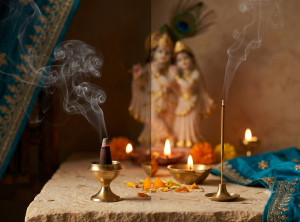
It is a little past five in the morning in Vrindavan. The lanes near Banke Bihari temple are still half asleep, but somewhere behind a wooden door, a diya has already been lit. A thin ribbon of smoke rises from a single agarbatti placed in a small brass stand, and within seconds the whole room smells like it has been waiting all night for exactly this moment — sandalwood, a trace of rose, something warm underneath that you can’t quite name.
This is how most of us were introduced to agarbatti — not as a “product,” but as a sound and a smell that meant it was time to sit down, close our eyes, and be still for a few minutes before the day took over. Somewhere along the way, incense became something we simply pick up off a shelf without thinking twice. And that’s exactly where the trouble begins, because not every stick sold as “agarbatti” today is made the way it used to be.
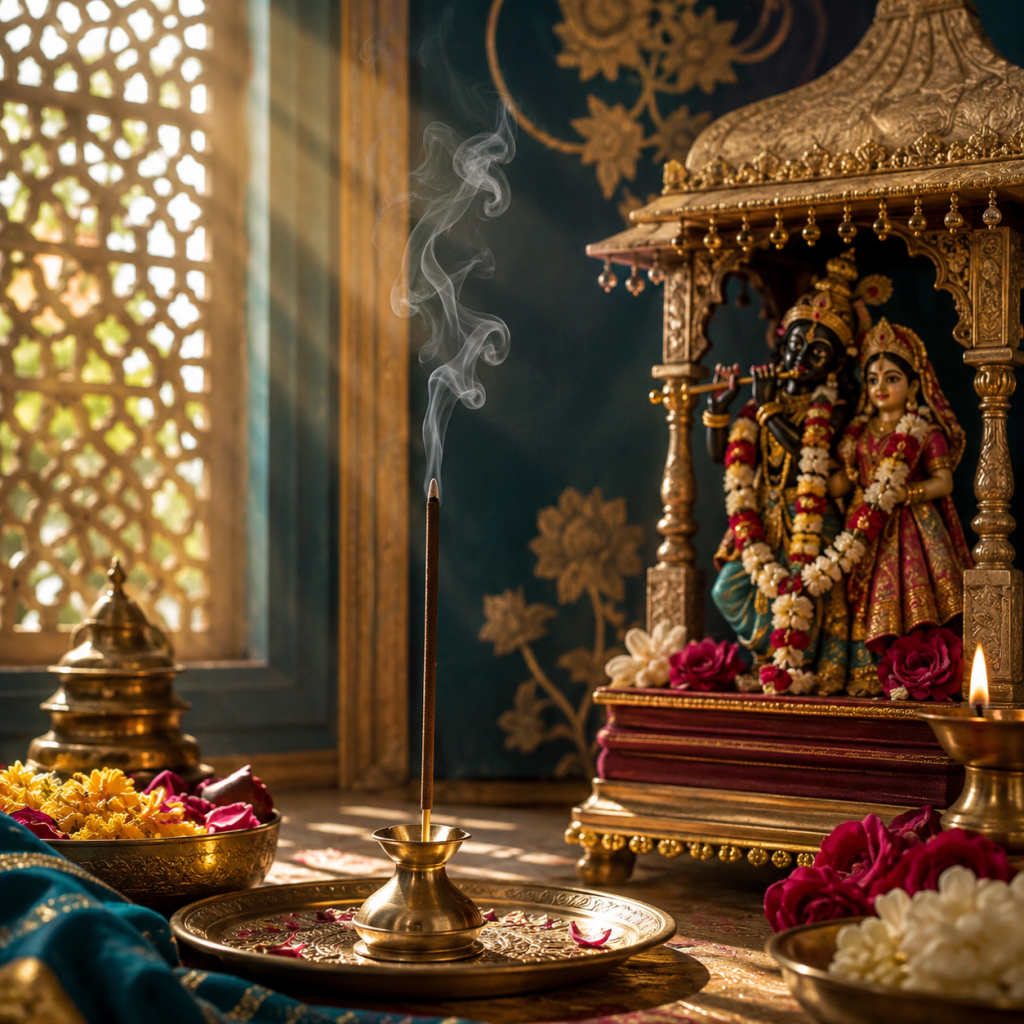
If you’ve ever lit one and felt a slightly sharp, chemical smell instead of that familiar warmth — or noticed a headache creeping in halfway through your puja — you already know what we’re talking about. So let’s walk through what actually separates a good agarbatti from a forgettable one, and how to buy agarbatti online in India (or anywhere in the world) without second-guessing your choice.
Why the Agarbatti You Choose Actually Matters
Agarbatti isn’t just fragrance — in puja, it’s considered one of the five traditional offerings (panchopachara), representing the element of air. Its smoke is meant to purify the space, hold your attention, and carry your prayer outward. A low-quality stick, loaded with synthetic dhoop oil or charcoal-heavy cores, undermines all of that. It burns fast, smells harsh, and — more importantly for daily use — isn’t something you want to breathe in every single day for years.
This is really the heart of choosing well: you’re not buying a fragrance stick, you’re bringing something into your home that you’ll sit close to, breathe in, and associate with your most sacred moments of the day.
1. Check What It’s Actually Made Of
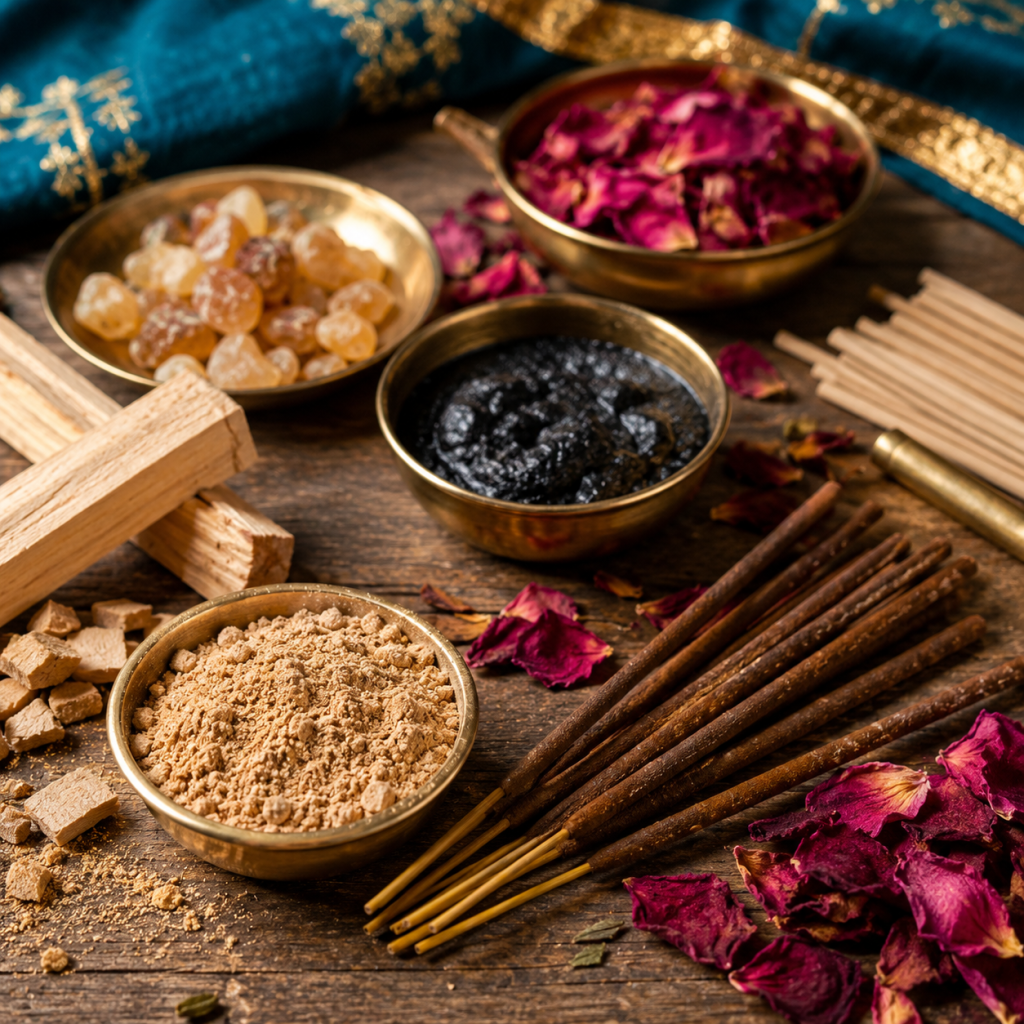
Traditional agarbatti is built on a bamboo core, coated with a paste of charcoal, natural gums (like joss powder or charcoal dust), and then dipped or rolled in essential oils, herbs, or natural attars. Look for ingredient transparency — a brand that’s confident about its process will usually mention things like “hand-rolled,” “natural resin base,” or specific ingredients like gugal, chandan (sandalwood), or rose.
If a product simply says “fragrance” with no further detail, that’s often a sign of synthetic aroma compounds rather than genuine botanical extracts. This matters for both your puja and your health, especially if you’re lighting incense daily in a closed room.
2. Smell Before You Judge (or Read Reviews Carefully)
A genuine sandalwood or rose agarbatti has a soft, layered smell — it doesn’t hit you all at once. Synthetic versions tend to be sharp, overly sweet, or almost powdery in a way that lingers unpleasantly on clothes and curtains. If you’re buying online and can’t smell it first, read reviews specifically for words like “authentic,” “mild,” or “just like the temple” — devotees are usually very vocal when something smells artificial.
3. Match the Agarbatti to the Deity or Occasion
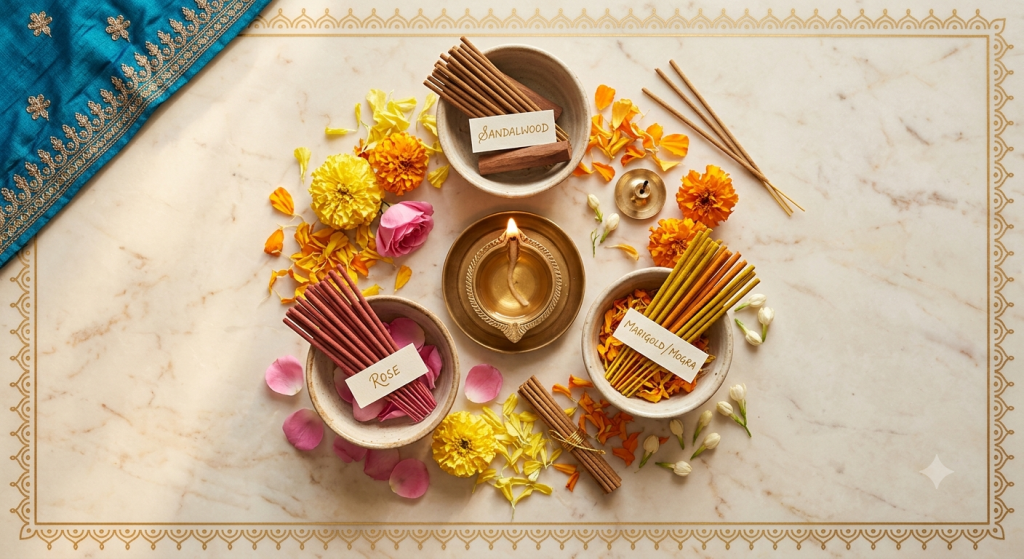
This is a question we get often — Kaunsi agarbatti kis devta ke liye? While there’s no strict rulebook, certain fragrances have carried traditional associations for generations:
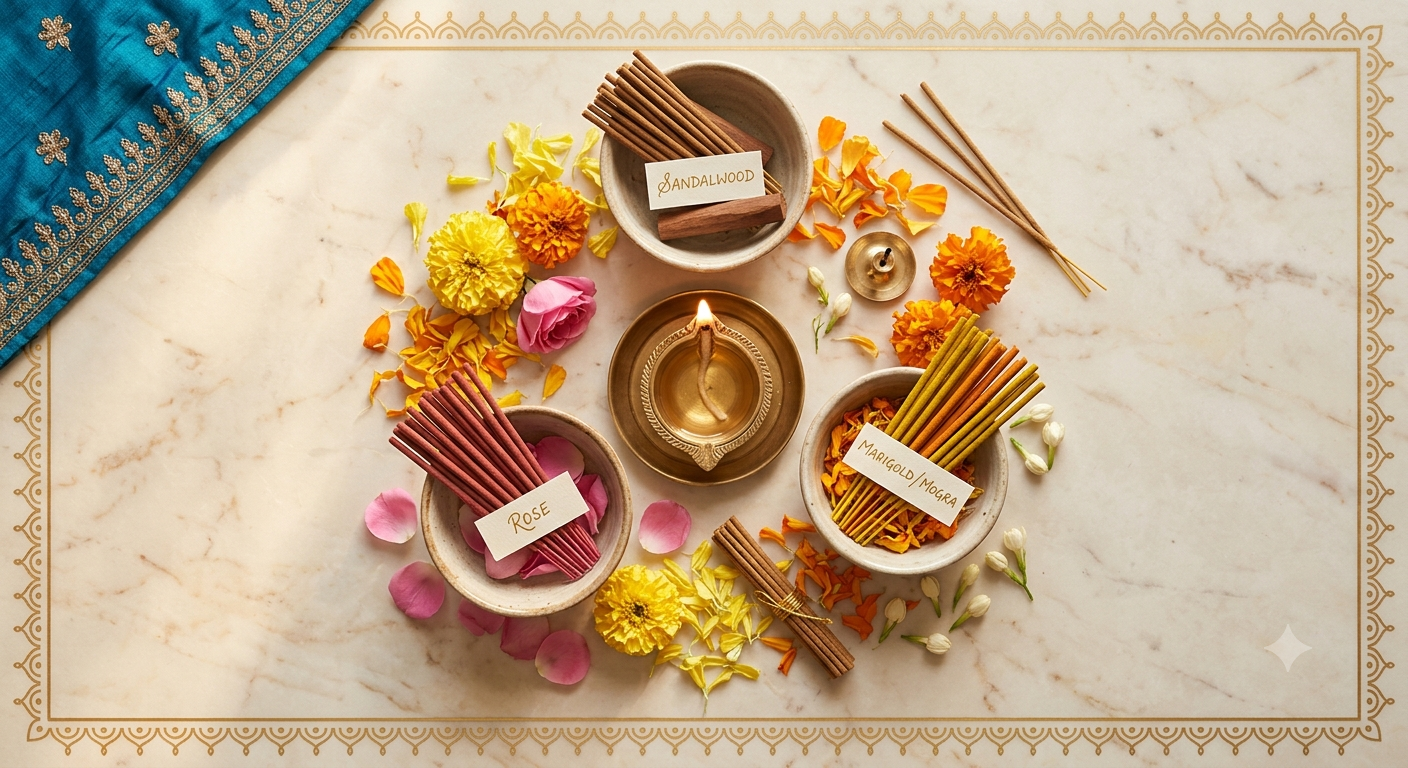
- Chandan (Sandalwood) — considered universally auspicious, used for almost all deities including Shiva and Vishnu forms
- Rose (Gulab) — closely associated with Radha Krishna and Krishna puja, evoking sweetness and shringar
- Mogra & Kesar — popular during festive days and Durga/Lakshmi puja
- Gugal & Loban — traditionally used for purification (shuddhikaran) before beginning any puja
If you’re setting up a Krishna or Radha-Krishna altar at home, rose and chandan blends are usually considered the best incense for Krishna puja, echoing the fragrances traditionally offered in Vrindavan’s own temples.
4. Consider Burn Time and Smoke Density
A well-made agarbatti burns slowly and evenly, usually 35–45 minutes per stick, releasing a steady, thin stream of smoke. If a stick burns out in under 15 minutes or produces thick, dark smoke, it likely has a heavier synthetic or chemical base — not ideal for daily use, especially for elderly family members or anyone with respiratory sensitivity.
5. Buy From Sources Rooted in the Tradition
This might be the most overlooked factor. Agarbatti made in or near Vrindavan and Mathura often follows recipes passed down through generations of temple suppliers, rather than mass-manufactured formulas designed purely for shelf appeal. When you’re looking for authentic puja items online, it’s worth checking whether the seller actually understands the ritual context — not just the retail one.
A Simple Way to Test Quality at Home
Once your agarbatti arrives, try this: light one stick in a closed room for a few minutes, then step out and come back in after 10 minutes. If the smell is still pleasant and hasn’t turned sharp or stale, that’s a strong sign of quality. Cheaper sticks often smell fine for the first minute and turn unpleasant as they continue burning — because the synthetic top-notes fade quickly, leaving the harsher base exposed.
Bringing It Back Home
At Keli Kunj, this is exactly the standard we hold ourselves to — because before this became a business, it was simply how puja was done in our own home, and in the homes around us in Vrindavan. Every agarbatti, dhoop, and attar we offer is chosen the way we’d choose it for our own mandir, not just for a catalogue.
If you’re setting up or refreshing your home temple, take a look at our range of hand-selected agarbatti and dhoop — sourced with the same care as the incense that rises every evening near the ghats of the Yamuna. Explore our Agarbatti & Dhoop collection and bring a little of Vrindavan’s daily aarti into your own home.
Radhe Radhe.
Content
Ans. Our agarbatti and dhoop are made using traditional methods — a bamboo core (for agarbatti) coated with natural resins, herbs, and essential oils like sandalwood, rose, and gugal. We avoid synthetic fragrance-only formulas wherever possible, so what you’re offering in puja is close to what was traditionally used in Vrindavan’s own temples.
Ans. Yes, our attars, including Rooh Rose and Rooh Lavender, are alcohol-free by design. This makes them suitable for both puja rituals (where alcohol-based fragrances are traditionally avoided) and everyday personal wear, including for those with sensitive skin.
Ans. Agarbatti and dhoop typically retain their fragrance for 12–18 months when stored in a cool, dry place away from direct sunlight. Attars, being oil-based, generally last 2–3 years or longer, and often deepen slightly in fragrance with age, similar to a fine perfume oil.
Ans. Keep agarbatti and dhoop in an airtight container or their original packaging, away from moisture and direct heat. Attars should be stored upright, tightly capped, and out of direct sunlight. Proper storage significantly extends fragrance life for both.