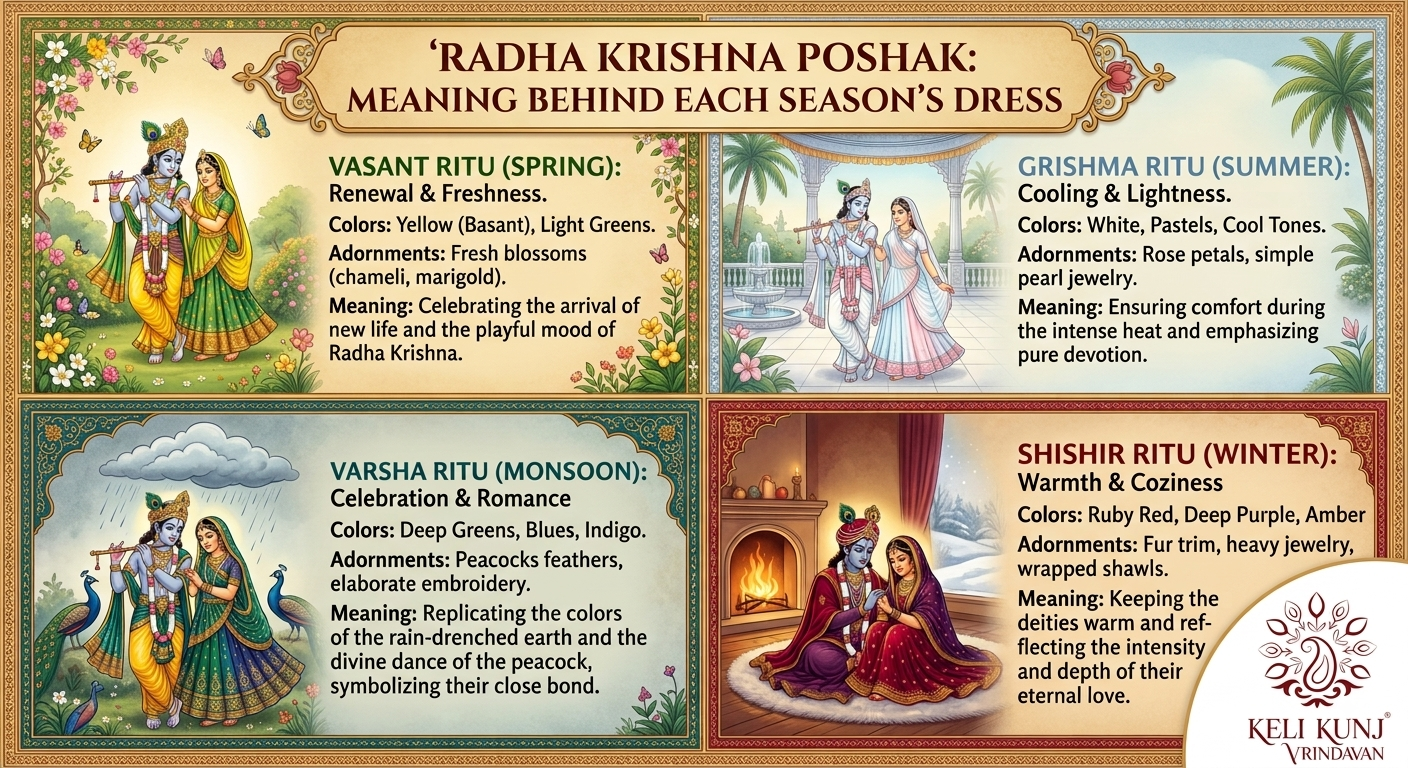
Radha Krishna Poshak — Meaning Behind Each Season’s Dress
Shri Radha Krishna Poshak — Meaning Behind Each Season’s Dress | Keli Kunj Meta Description: Ever wondered why deity poshak changes with the seasons? A look at the tradition behind Radha Krishna’s seasonal dress and what each fabric and colour signifies. Focus Keyphrase: Radha Krishna poshak
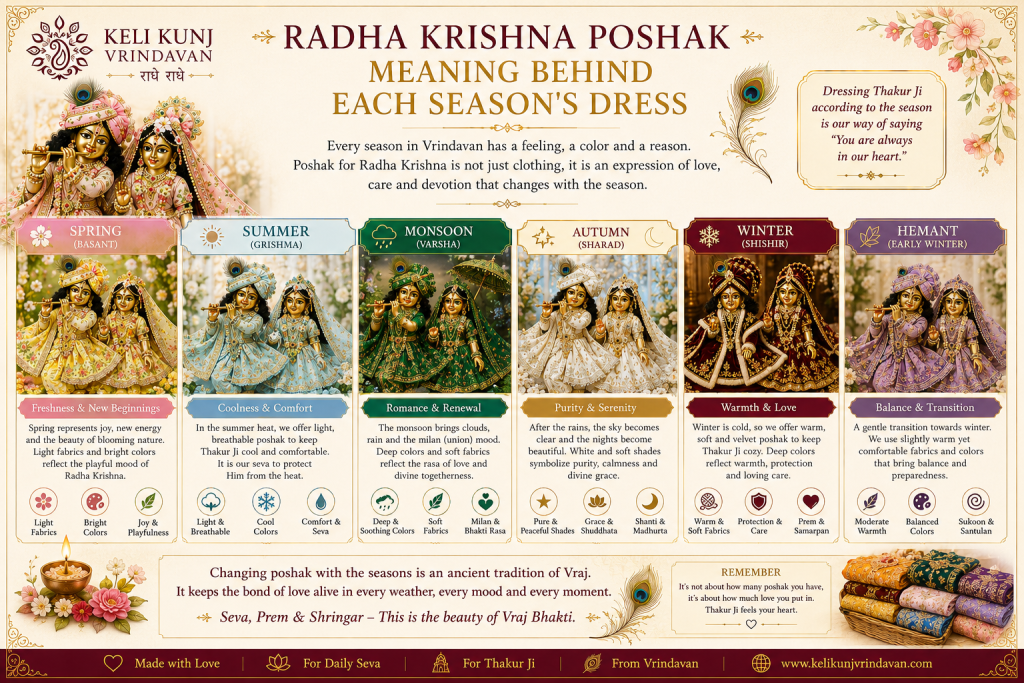
Every year, around the time Holi approaches, the seva-dressers at the bigger Vrindavan temples begin quietly retiring the heavier winter poshaks — the velvets, the deep maroons, the zari-heavy borders — and bringing out something lighter. Cottons. Pastels. Fabric you can almost feel breathing. A friend who does seva at a small family mandir once told me she can tell the season is changing before she even checks a calendar, just by which poshak trunk she’s reaching into that week.
It’s easy to assume deity dressing is just about looking beautiful, and it certainly is that too. But if you spend any time around Vrindavan’s poshak tradition, you realize the seasonal changes aren’t decorative choices — they follow the same logic a devoted household follows for its own family. You dress warmly in winter and lightly in summer not because of fashion, but because of care. Seva for Radha Krishna follows exactly that same instinct.
Why the Deity’s Clothing Changes With the Seasons
In the Vaishnav tradition, seva (service to the deity) is modeled on how you would care for someone you love deeply, living in your own home. That means dressing them appropriately for the weather, just as you would a child or an honoured guest. This is one of the reasons Radha Krishna poshak collections are typically organized by season rather than just by occasion.
Summer Poshak — Lightness and Cool Colours
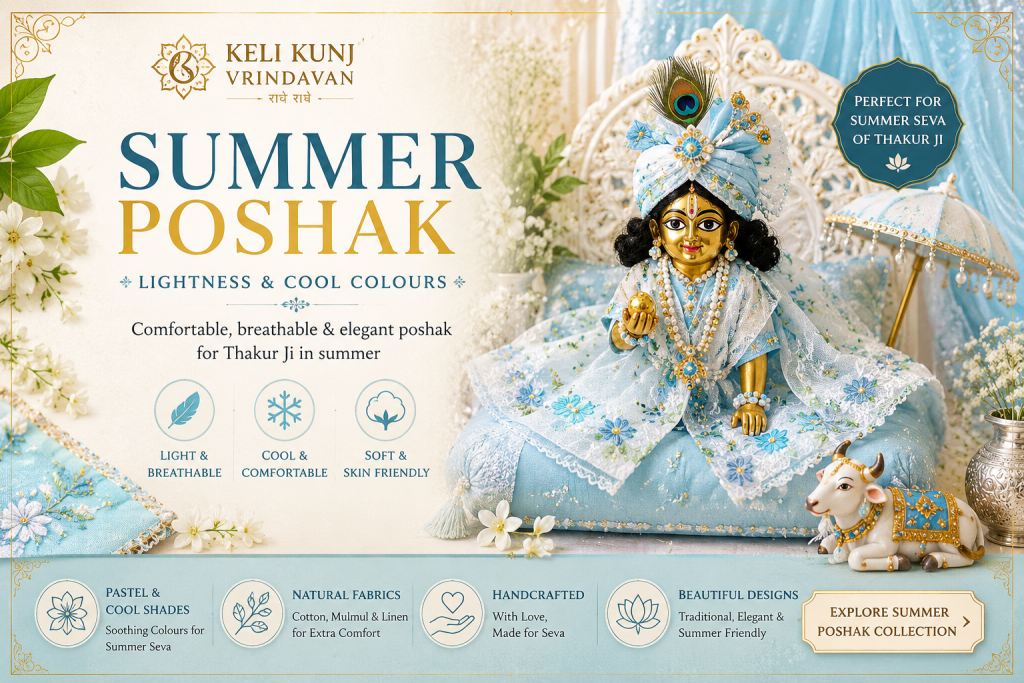
From around Holi through the peak of summer, poshaks shift to lightweight cottons, malmal, and georgette — fabrics that don’t trap heat. Colours lean toward whites, pale yellows, mint greens, and soft blues, echoing the coolness devotees want to offer during Vrindavan’s hottest months. Sandalwood paste (chandan) is often applied to the murti during this season too, and pankha (fan) seva becomes part of the daily ritual — small gestures of keeping the deity comfortable exactly as you would a family member on a hot afternoon.
Monsoon Poshak — Deeper, Richer Tones
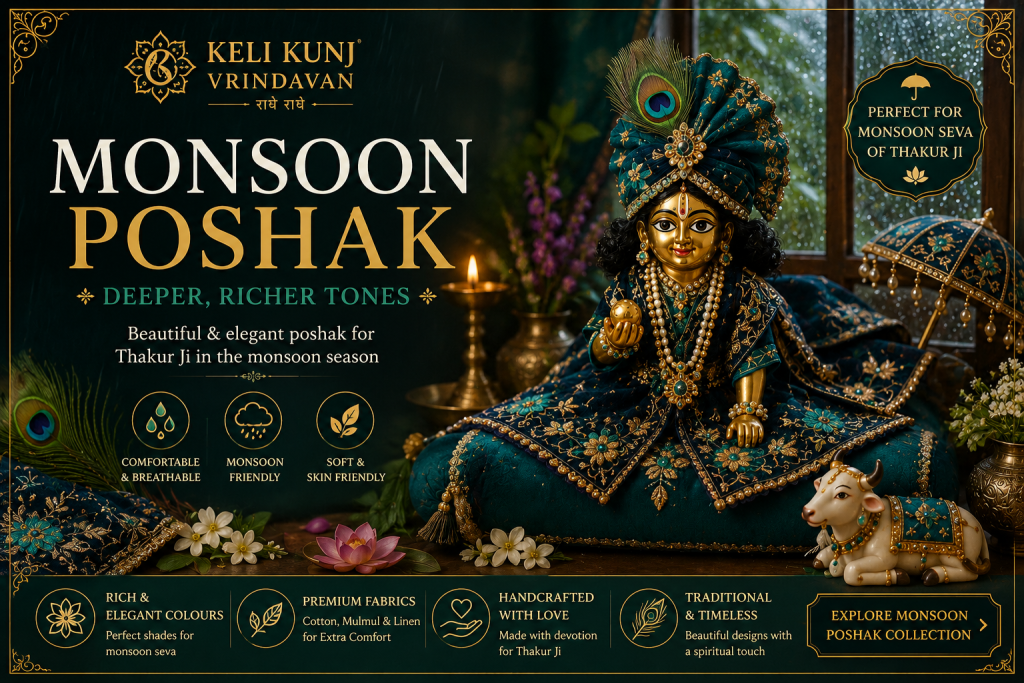
As the rains arrive, poshak colours often deepen — greens, deep blues, and monsoon-associated shades come forward, sometimes echoing the lush, freshly-washed landscape of Braj itself during Shravan month. This is also the season most associated with Krishna’s own iconography — peacock feathers, the colour of rain clouds — making it a particularly meaningful stretch for poshak that leans into those traditional associations.
Winter Poshak — Velvet, Warmth, and Depth
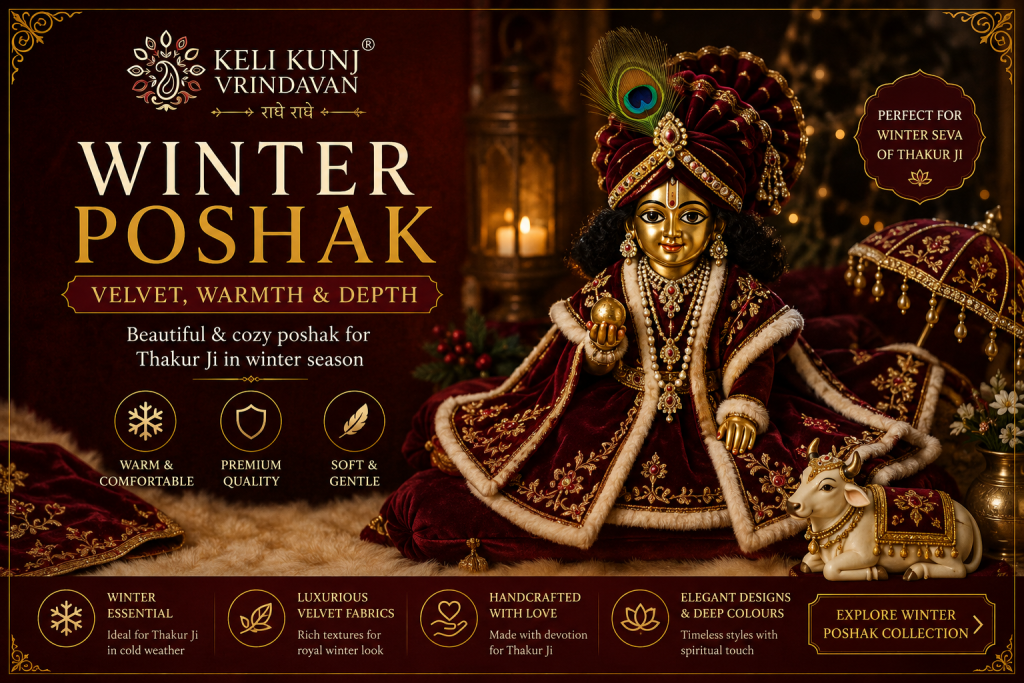
Once winter sets in, the shift is dramatic. Velvets, silks, and heavier brocades replace the light summer cottons. Colours turn richer — deep maroons, royal blues, warm golds — and layering increases, sometimes with an additional shawl or wrap added to the poshak itself for the coldest months. Just as a family might bring out heavier razais and shawls in December, the deity’s wardrobe reflects the same seasonal care.
Festival Poshak — A Category of Its Own
Beyond the three broad seasons, festival-specific poshaks form their own tradition entirely:
- Janmashtami — Often deep blues, peacocks, and richly embroidered fabric marking Krishna’s birth
- Holi — Bright pinks, yellows, and playful prints, sometimes with the poshak itself designed to survive a gentle colour celebration
- Sharad Purnima / Raas — Flowing, ethereal fabrics associated with the raas leela imagery
- Diwali — Gold-heavy, richly bordered poshaks reflecting the festival of light
Many devoted households build their poshak collection gradually — starting with one everyday poshak and one festival poshak, then slowly adding seasonal pieces as their seva practice deepens over the years.
How to Start Building a Poshak Collection
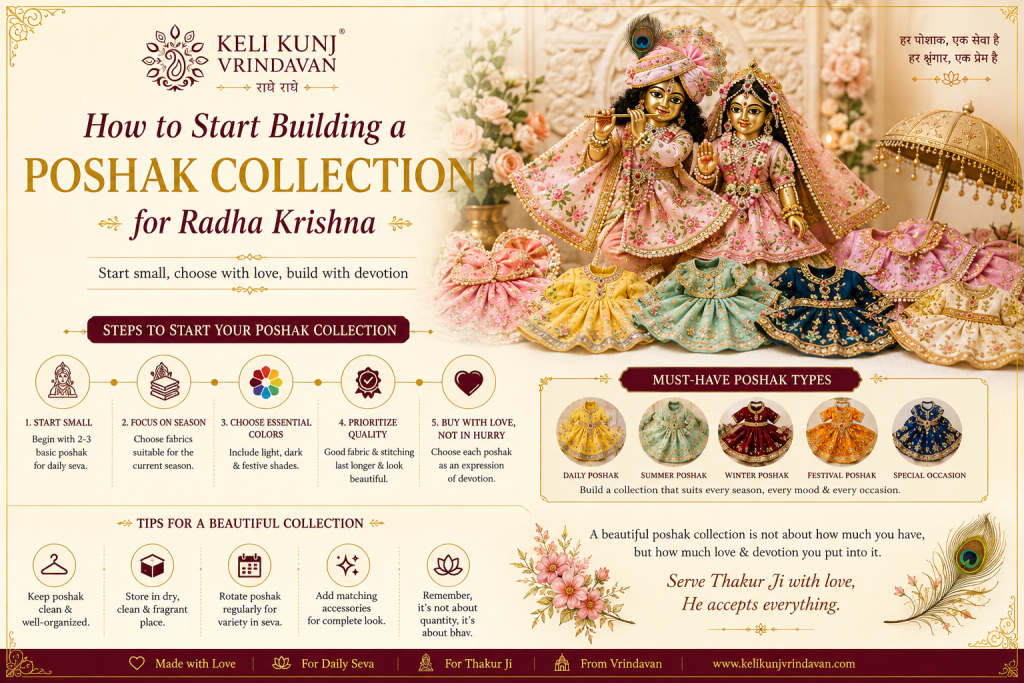
If you’re just beginning:
- Start with one versatile poshak — a mid-weight fabric in a neutral or gold-toned colour works across most of the year
- Add a summer cotton piece next — this is often the most-used poshak since summer stretches long in most of India
- Add a festival-specific poshak for whichever occasion matters most to your family — Janmashtami is a common starting point
- Build toward a winter velvet piece last — since it’s needed for the shortest stretch of the year
There’s no need to acquire an entire seasonal wardrobe at once. Most family mandirs build theirs over several years, the same way any wardrobe grows.
A Note From Vrindavan
At Keli Kunj, our poshaks are stitched with this same seasonal understanding — light cottons for summer seva, richer velvets and brocades for winter, and festival pieces designed around Janmashtami, Holi, and Diwali. Each one is made the way seva-dressers in Vrindavan have made them for generations: with the deity’s comfort as the starting point, not just the appearance.
Explore our Poshak collection for Laddu Gopal, Radha Krishna, and Thakur Ji, handcrafted in Vrindavan.
Radhe Radhe.
Frequently Asked Questions
Many households change it seasonally (roughly every 3-4 months) and additionally for major festivals. There’s no strict rule — starting with two or three poshaks and adding more gradually is completely normal.
Lightweight cottons, malmal, and georgette are traditionally preferred for summer, as they keep the deity cool during Vrindavan’s hottest months, much like you’d dress a family member.
Velvet and heavier silks provide warmth, mirroring how a family would dress warmly in cold months. Richer colours like maroon and royal blue are also traditionally associated with winter seva.
Yes — Janmashtami poshaks are typically deep blue or peacock-toned with rich embroidery, marking the significance of Krishna’s birth celebration.
Poshak sizing differs based on the murti’s height and form, so it’s best to choose a poshak made for your specific murti size rather than assuming a single size fits all deity forms.