Why Alcohol-Free Attar is Better for Daily Wear and Puja
Why Alcohol-Free Attar is Better for Daily Wear & Puja | Keli Kunj Meta Description: Alcohol-based perfumes fade fast and don’t belong near the puja thali. Here’s why traditional alcohol-free attar is better for daily wear, skin, and worship. Focus Keyphrase: alcohol free attar
Years ago, an old attar maker in Vrindavan’s Chhata Bazaar told me something I’ve never forgotten: “Perfume ek ghante ke liye hota hai, attar poore din ke liye.” Perfume is for an hour, attar is for the whole day. He’d been distilling rose and chandan attars the traditional Bhapka way for over thirty years, and he refused to keep even a single alcohol-based bottle in his shop — not because it was against any rule, but because, in his words, “alcohol jaldi udh jaata hai, aur saath mein attar ki asli khushboo bhi le jaata hai.” Alcohol evaporates fast, and it takes the true fragrance of the attar with it.
That conversation is a good starting point for understanding why alcohol-free attar has stayed central to Indian daily life and worship for centuries, even as alcohol-based perfumes flooded the market. If you’re deciding between the two — for your own daily wear or for puja — here’s what actually makes the difference.
What Makes Attar Different From Perfume in the First Place
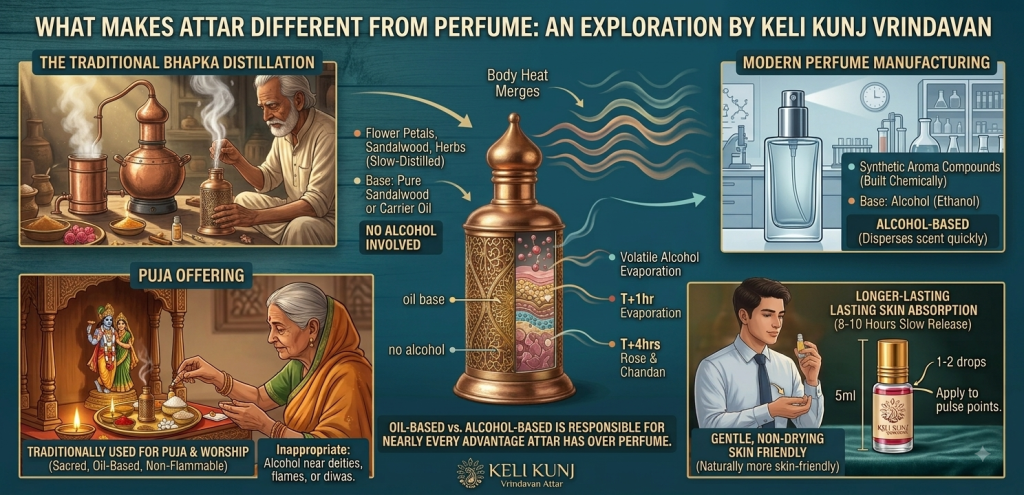
Traditional attar is made through Bhapka distillation — flower petals, sandalwood, or herbs are slow-distilled into a base of pure sandalwood oil (or sometimes a similar carrier oil), with no alcohol involved at all. Western perfumes, by contrast, are usually alcohol-based, using ethanol to carry and disperse the fragrance quickly.
This one difference — oil-based versus alcohol-based — is responsible for nearly every advantage attar has over perfume.
1. It Lasts Longer on Skin
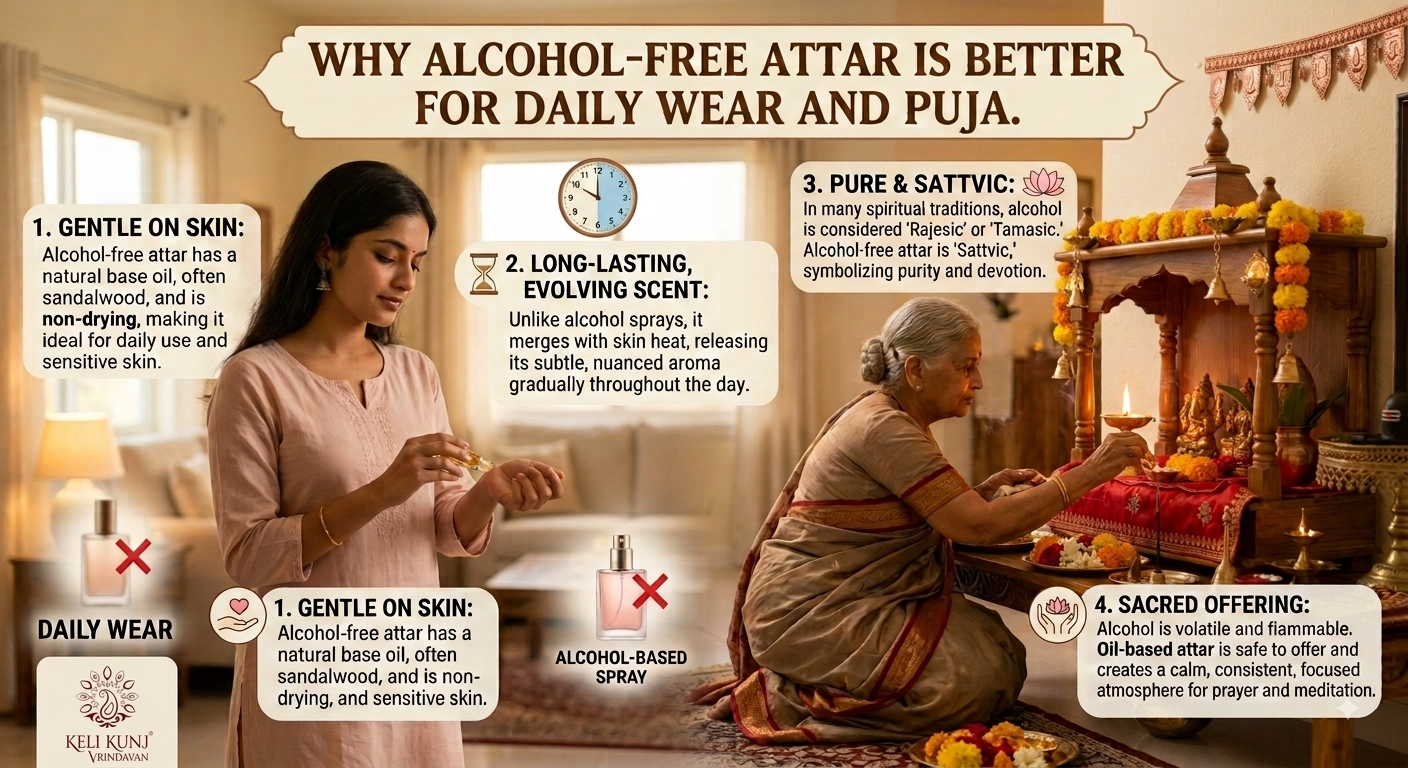
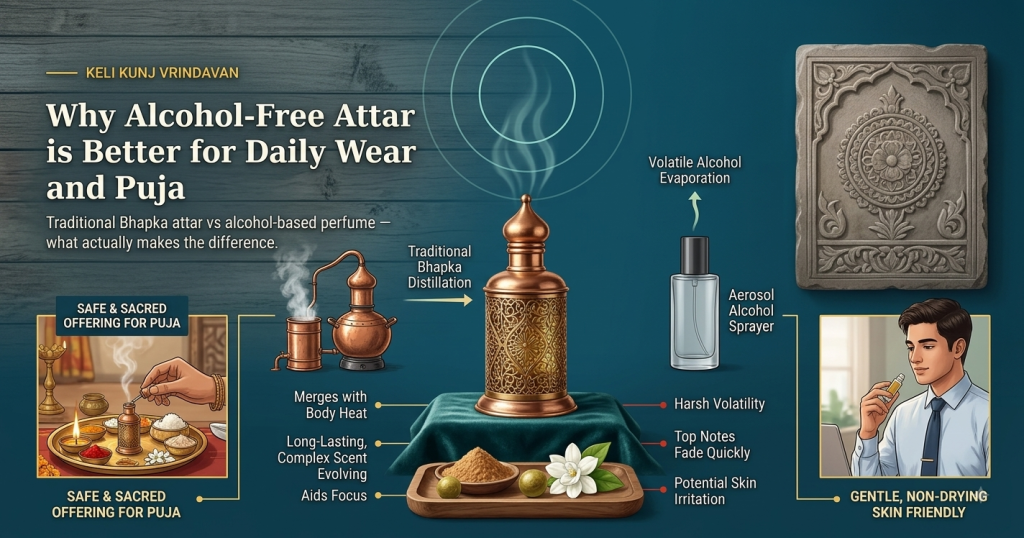
Alcohol evaporates within minutes, taking the top notes of a fragrance with it — which is why perfume often smells strong for the first hour and then fades quickly. An oil-based attar sits on the skin instead of evaporating off it, releasing its fragrance slowly over 8-10 hours. A few drops on the pulse points in the morning genuinely last through a full day.
2. It’s Gentler on Skin, Especially for Daily Use
Alcohol-based perfumes can dry out and irritate skin with regular use, especially in India’s heat where they’re often reapplied through the day. Attar’s oil base is naturally more skin-friendly and, in many cases, even mildly moisturizing. This is a big part of why attar has traditionally been the choice for daily wear rather than something reserved for going out.
3. It’s the Right Choice for Puja and Ritual Use
This is where the difference matters most. Alcohol is traditionally avoided in puja settings altogether — it’s considered inappropriate to offer or use near the deity, the puja thali, or a havan flame (alcohol is also flammable, which makes it genuinely unsuitable near diyas and dhoop). Alcohol-free attar, by contrast, has been used in temples and home puja for generations: a drop on the deity, on the puja cloth, or worn by the devotee themselves during worship, without any of these concerns.
If you keep a home mandir, this is usually the simplest rule of thumb: keep perfume for going out, and keep attar for your puja and daily wear both.
4. The Fragrance Itself is More Honest
Because attar is distilled directly from real flowers, wood, or herbs rather than built from synthetic aroma compounds, the fragrance tends to feel warmer and more natural rather than sharp or artificial. Rose attar smells like rose, not like a chemical approximation of one. For daily wear especially — where you’re smelling it far more than anyone around you — that difference is noticeable over time.
5. A Little Goes a Long Way
Because oil-based attar is more concentrated than alcohol-diluted perfume, you genuinely need only 1-2 drops, applied to pulse points (wrists, behind the ears, the base of the throat) rather than sprayed liberally. A small roll-on bottle of pure attar often outlasts a full bottle of perfume simply because so little is needed each time.
How to Use Attar for Both Daily Wear and Puja
- Morning: A drop each on both wrists after your bath, before starting the day
- Before puja: A drop on the puja cloth or offered near the deity, and a drop worn by you as well
- Evening: Reapply lightly if needed — a little goes further than you’d expect
Rose attar and chandan attar are the most commonly used for both purposes, while lavender and mogra are popular purely for personal daily wear.
A Note From Vrindavan
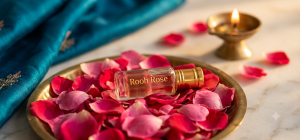
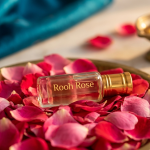
At Keli Kunj, our attars are made using traditional Bhapka distillation, without alcohol, exactly the way they’ve been made in Vrindavan for generations — meant equally for your morning routine and your puja thali. If you’re switching from perfume for the first time, start with our Rooh Rose or Rooh Lavender roll-ons; a few drops is genuinely all it takes.
Explore our Attar & Perfume collection, handcrafted in Vrindavan.
Radhe Radhe.
Frequently Asked Questions
Yes — because it’s oil-based rather than alcohol-based, attar is generally gentler on skin and well-suited for daily use, unlike some alcohol-based perfumes that can dry out skin with frequent reapplication.
Alcohol is traditionally considered inappropriate near the deity, puja thali, or havan flame in Hindu worship, and it’s also flammable, making it unsuitable near diyas and dhoop. Alcohol-free attar has none of these concerns.
Longer, in most cases. Alcohol evaporates within minutes, while oil-based attar releases fragrance slowly over 8-10 hours since it sits on the skin rather than evaporating off it.
Just 1-2 drops on pulse points like the wrists or behind the ears is enough, since attar is more concentrated than alcohol-diluted perfume.
Rose and chandan (sandalwood) attar are the most traditional choices used for both personal wear and worship, while floral options like mogra or lavender are popular purely for daily use.