Discover the spiritual significance and scientifically informed perspective of Tulsi Mala. Learn about japa, meditation, traditional beliefs, benefits, care tips, FAQs and more.
Tulsi Mala Benefits — Spiritual and Scientific Perspective
In India, Tulsi is much more than an ordinary plant. For generations, it has held a special place in homes, temples and devotional practices. In Vaishnava traditions especially, Tulsi is regarded with deep reverence and is closely associated with Shri Krishna and devotional service.
This is why a Tulsi Mala is not simply a string of wooden beads. For many devotees, it is a daily reminder of prayer, naam-japa, humility and spiritual discipline.
But there is an interesting question that many people ask today:
“Are the benefits of Tulsi Mala only spiritual, or is there a scientific perspective too?”
The honest answer is that these are two different areas. The spiritual importance of Tulsi Mala comes primarily from religious tradition and personal faith, while scientific research has mainly examined Tulsi (Ocimum tenuiflorum) as a plant and meditation/japa practices as mind-body practices. There is not strong scientific evidence that simply wearing a Tulsi Mala produces specific medical effects.
Understanding this distinction allows us to appreciate Tulsi Mala without making exaggerated claims.
What Is a Tulsi Mala?
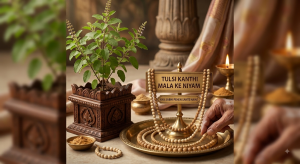
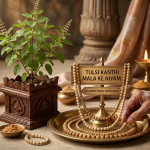
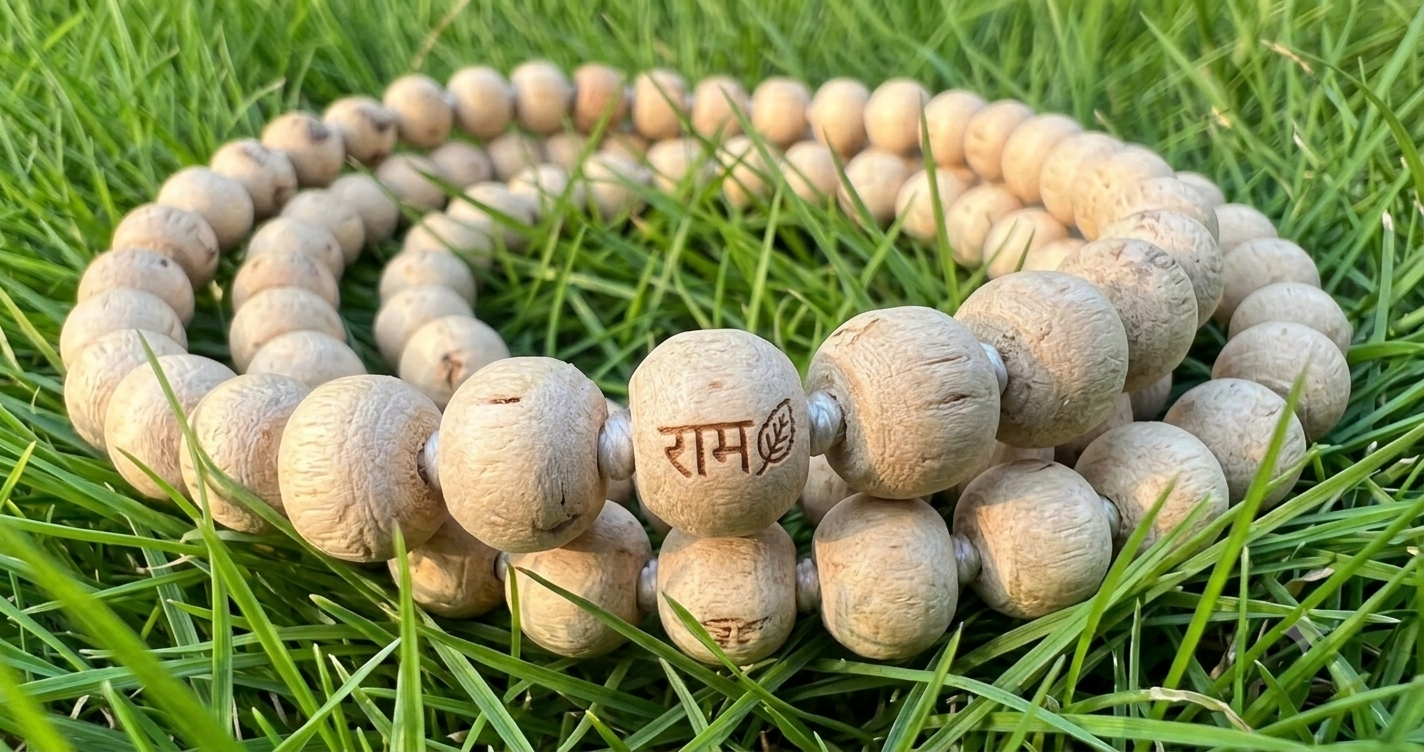
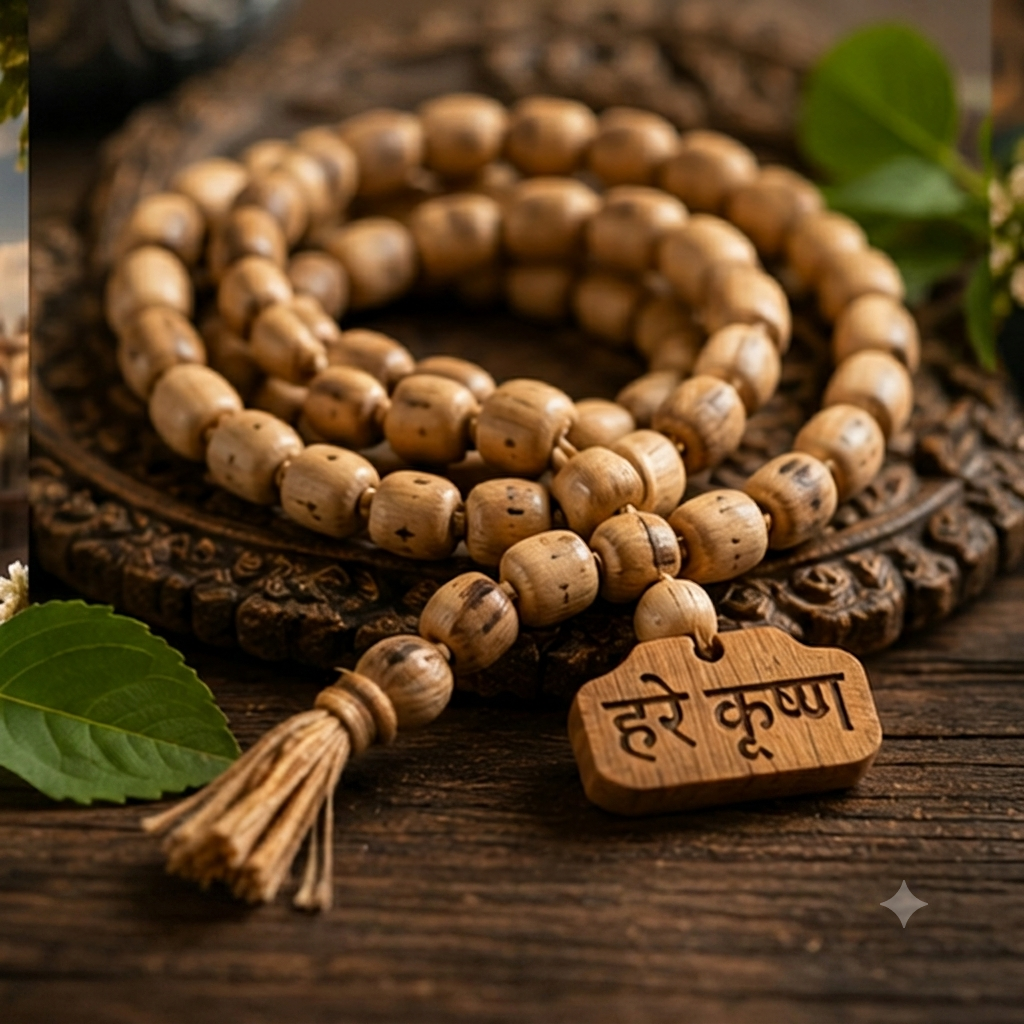
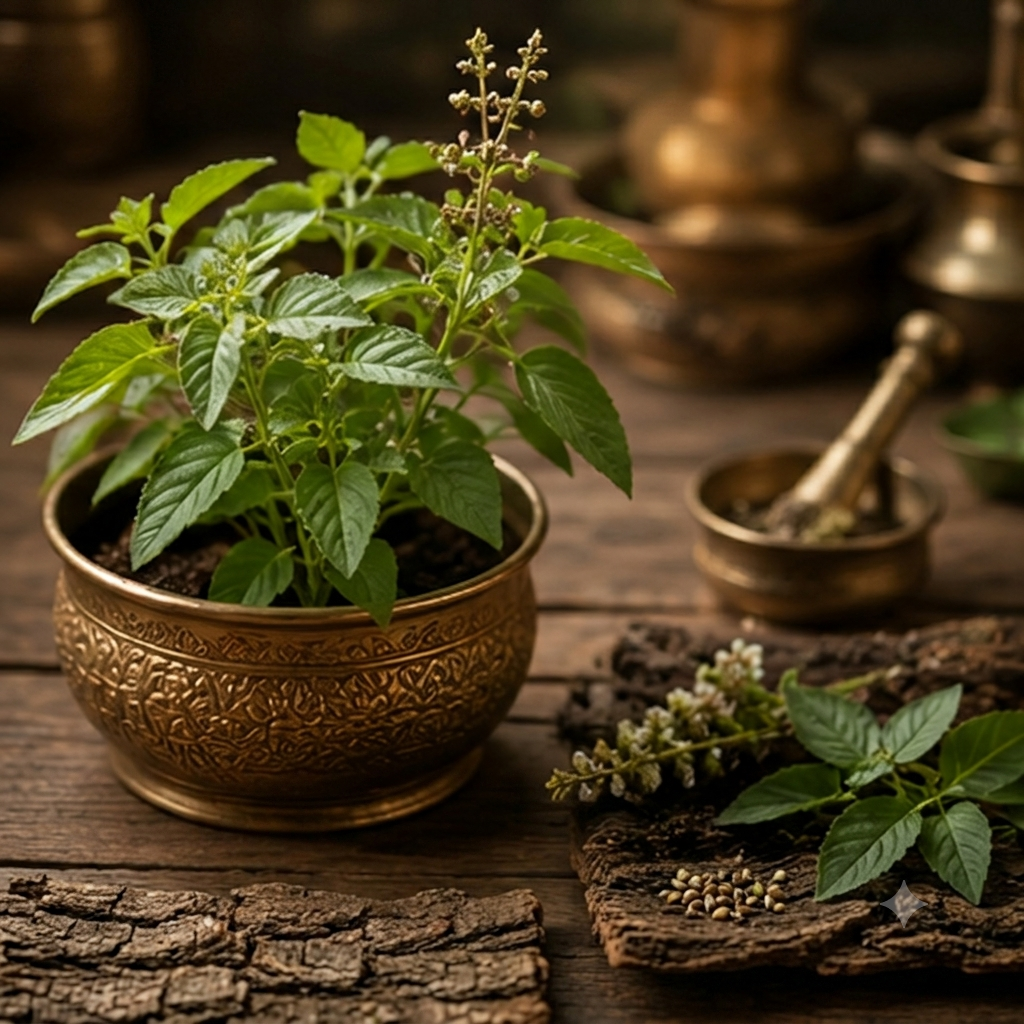
A Tulsi Mala is traditionally made from the wood of the Tulsi plant, commonly known as Holy Basil (Ocimum tenuiflorum).
It may be worn around the neck as a Kanthi Mala or used for chanting and meditation as a Japa Mala.
Depending on the tradition and purpose, a mala may contain different numbers of beads. A japa mala is commonly associated with a cycle of mantra repetition, helping the practitioner maintain count without repeatedly looking at a clock or phone.
The physical beads also provide something simple and tangible to focus on.
1. Spiritual Significance of Tulsi Mala
For devotees, the first and most important benefit of Tulsi Mala is spiritual remembrance.
Wearing a Tulsi Mala can serve as a daily reminder:
“I want to keep my mind connected with Bhagwan and my actions aligned with seva and bhakti.”
In Vaishnava devotional traditions, Tulsi is especially revered in relation to Shri Krishna. Therefore, Tulsi beads are often treated with respect and are associated with naam-japa, bhakti and devotional identity.
For many devotees, the mala represents:
- Bhakti and devotion
- Remembrance of Shri Krishna
- Naam-japa and mantra practice
- Spiritual discipline
- Humility and surrender
- Connection with a devotional tradition
These are spiritual and cultural meanings rather than scientifically measurable medical effects.
2. Tulsi Mala and Naam Japa
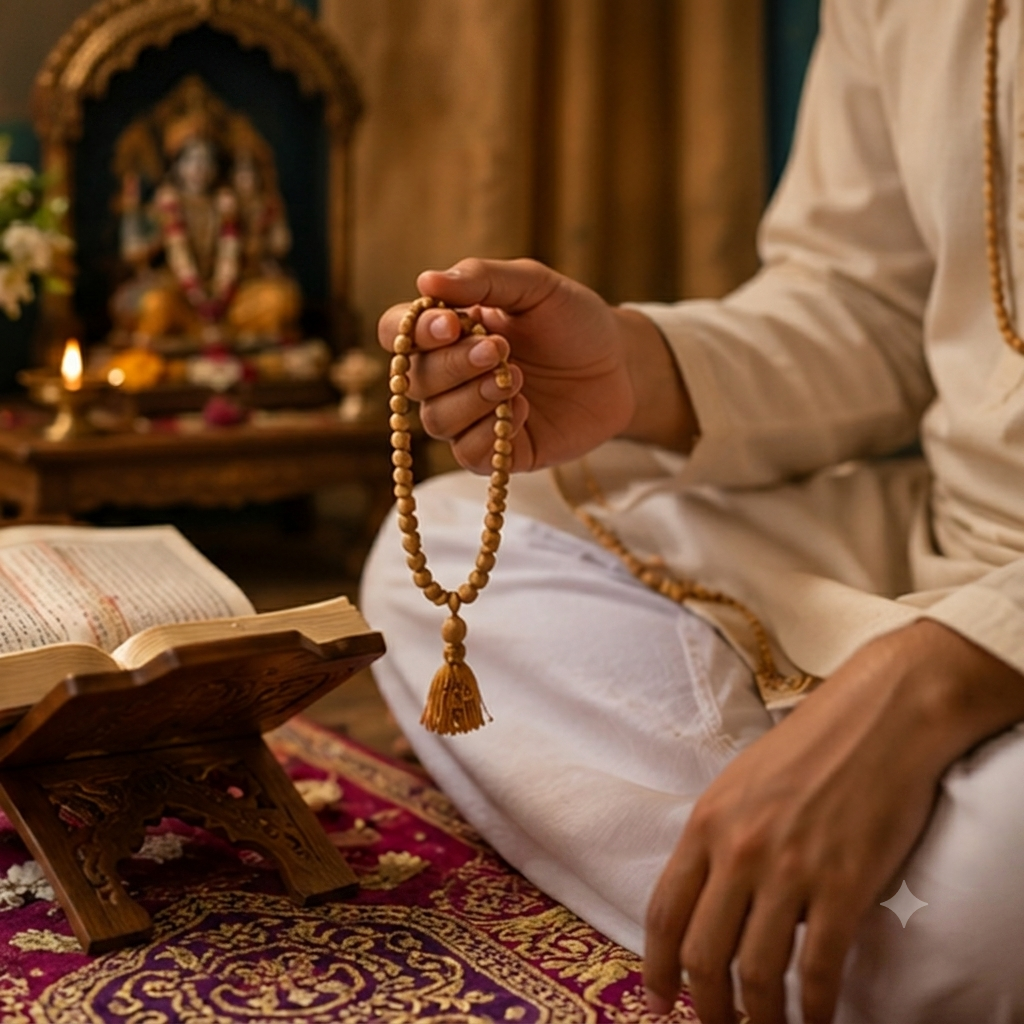
One of the most beautiful uses of a mala is japa.
When a person repeats a mantra bead by bead, the mala creates a simple rhythm:
Mantra → Bead → Breath → Attention → Repeat
This repetitive process can help reduce distractions during prayer.
Instead of thinking about how many times a mantra has been repeated, the devotee can move through the beads and concentrate on the naam.
For someone beginning a spiritual practice, this can make daily chanting easier and more structured.
3. Can Tulsi Mala Help With Meditation?
This is where the spiritual practice and scientific perspective overlap—but they should not be confused.
Scientific research on meditation and mindfulness suggests that these practices may help with stress and anxiety in some people. The U.S. National Center for Complementary and Integrative Health (NCCIH) notes that mindfulness meditation may help reduce symptoms of stress, anxiety and depression and may improve sleep in some circumstances.
A mala can become a physical anchor for meditation.
For example, a person may sit quietly, hold the beads and repeat a mantra. The tactile sensation of the beads can help create a consistent routine.
However, it would be inaccurate to say:
“Tulsi beads scientifically cure anxiety or stress.”
There isn’t sufficient evidence to make that claim.
A more accurate statement is:
“Regular meditation and focused chanting may support relaxation and mental well-being, and a mala can help structure that practice.”
4. What Does Science Say About Tulsi?
Scientific research has investigated Tulsi itself, particularly when it is consumed as a herb or extract.
A systematic review published in Evidence-Based Complementary and Alternative Medicine examined human studies involving Tulsi and reported promising findings in areas including psychological stress, metabolic health and other outcomes. However, the researchers also emphasized the need for larger and longer-term clinical studies.
This distinction is extremely important.
Research on consuming Tulsi ≠ research on wearing Tulsi Mala.
The fact that Tulsi has been studied as a medicinal plant does not prove that wearing a Tulsi bead necklace produces the same effects.
Therefore, claims such as:
- “Tulsi Mala cures disease”
- “Tulsi Mala controls blood pressure”
- “Tulsi Mala removes anxiety”
- “Tulsi Mala detoxifies the body”
should not be presented as scientifically established facts.
5. Tulsi Mala as a Daily Spiritual Reminder
Perhaps the most practical benefit of wearing a Tulsi Mala is surprisingly simple:
It reminds you.
It can remind you to pause before reacting.
It can remind you to chant.
It can remind you of your spiritual path while working, travelling or going through a busy day.
In today’s world, where phones and notifications constantly compete for attention, having a physical symbol of one’s spiritual practice can be meaningful.
The value may therefore come not from a “magical” effect of the material, but from the meaning, discipline and practice associated with it.
6. Tulsi Mala for Beginners
If you are new to Tulsi Mala, there is no need to make your spiritual routine complicated.
Start with a few minutes every day.
Choose a quiet place, sit comfortably and repeat your chosen mantra with attention.
For example:
“Hare Krishna Hare Krishna, Krishna Krishna Hare Hare
Hare Rama Hare Rama, Rama Rama Hare Hare.”
Or follow the mantra and tradition that you personally practice.
The goal is not simply to move the beads quickly.
The real purpose is to gradually bring attention toward the naam.
7. How to Take Care of Tulsi Mala
Tulsi wood is natural and can be more delicate than metal or synthetic beads.
Some simple care practices include:
- Keep the mala dry whenever possible.
- Avoid prolonged soaking in water.
- Keep it away from harsh chemicals and perfumes.
- Store it in a clean place when not in use.
- Handle the beads gently.
- Avoid unnecessary pulling or stretching of the thread.
Most importantly, follow the practices of your own spiritual tradition regarding how the mala should be worn and handled.
Tulsi Mala: Faith Meets Mindfulness
The beauty of Tulsi Mala lies in the fact that its meaning can be understood at different levels.
Spiritually, it represents devotion, remembrance and connection with a sacred tradition.
Practically, it provides a simple tool for counting mantra repetitions.
From a mind-body perspective, the chanting and meditation practice performed with a mala may support focus and relaxation. Scientific evidence supports potential benefits of meditation and mindfulness for stress and anxiety, although results vary and these practices should not be treated as substitutes for appropriate medical care.
And perhaps that is the most balanced way to look at Tulsi Mala:
The bead itself is sacred to the devotee; the practice gives it daily meaning.
Frequently Asked Questions (FAQ)
Tulsi Mala is a devotional mala traditionally made from the wood of the Tulsi plant, also known as Holy Basil. It is commonly used in devotional practices, naam-japa and meditation.
Traditionally, Tulsi Mala is valued for spiritual remembrance, devotion, naam-japa and maintaining a connection with one’s devotional practice.
There is not sufficient scientific evidence that simply wearing Tulsi Mala provides specific medical benefits. Scientific research has studied Tulsi as a plant and meditation as a practice, but these findings should not be directly transferred to wearing a Tulsi necklace.
Yes. A mala can be used as a practical tool for counting mantra repetitions and maintaining attention during meditation or prayer.
The evidence relates primarily to meditation and mindfulness practices, which may help with stress and anxiety. A Tulsi Mala can support such a practice by providing a physical focus and counting method.
Keep it clean and dry, avoid prolonged exposure to water and chemicals, and handle the natural beads gently.
No. Beginners can also use a Tulsi Mala as part of a simple, consistent chanting or prayer routine, while respecting the practices of their particular spiritual tradition.
Not necessarily. Tulsi Mala is specifically associated with Tulsi wood and carries a particular devotional significance, especially in Vaishnava traditions.
Many devotees traditionally wear Tulsi Mala regularly. However, specific rules regarding wearing and handling it can vary between traditions, so it is best to follow the guidance of your guru or sampradaya.
Choose a seller that clearly describes the material, bead quality and craftsmanship. For devotees looking for products connected with Vrindavan’s devotional culture, Keli Kunj Vrindavan can present Tulsi Mala as part of its spiritual and devotional collection.
Final Thoughts
A Tulsi Mala is ultimately more than an accessory.
For a devotee, it can be a symbol of bhakti. For someone practicing japa, it can be a simple counting tool. And for someone building a meditation routine, it can become a physical reminder to slow down, breathe and focus.
Science can investigate the plant and the practice, but the deeper spiritual meaning of Tulsi Mala belongs to tradition, faith and personal experience.
Perhaps its greatest everyday benefit is the simplest one:
Every time you touch the beads, you remember why you began the journey.
Suggested CTA for Keli Kunj
॥ श्री राधावल्लभ जयति ॥an