Confused between dhoop and agarbatti for your daily puja? A simple, practical guide to the difference, when to use which, and how both fit into Vrindavan’s puja traditions.
Dhoop vs Agarbatti — Difference and Which One to Use When
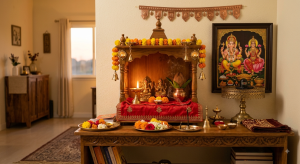
During Kartik month in Vrindavan, the evenings change completely. Every haveli and temple courtyard fills with a thicker, deeper smoke than usual — not the thin curl of an agarbatti, but something heavier, rounder, almost hugging the ground before it rises. That’s dhoop. Ask any elder in Braj and they’ll tell you: agarbatti is for everyday remembrance, but dhoop is for occasions that ask for something more — a festival, a havan, a moment that needs the room to be completely filled with fragrance, not just gently touched by it.
If you’ve ever stood in a puja store confused about which one to pick — or wondered why your grandmother insisted on lighting dhoop only on specific days — this guide is exactly for you.
The Core Difference: Form and Composition
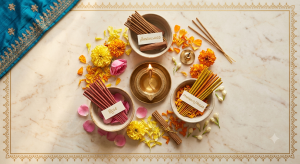
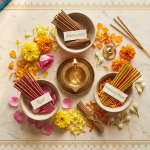
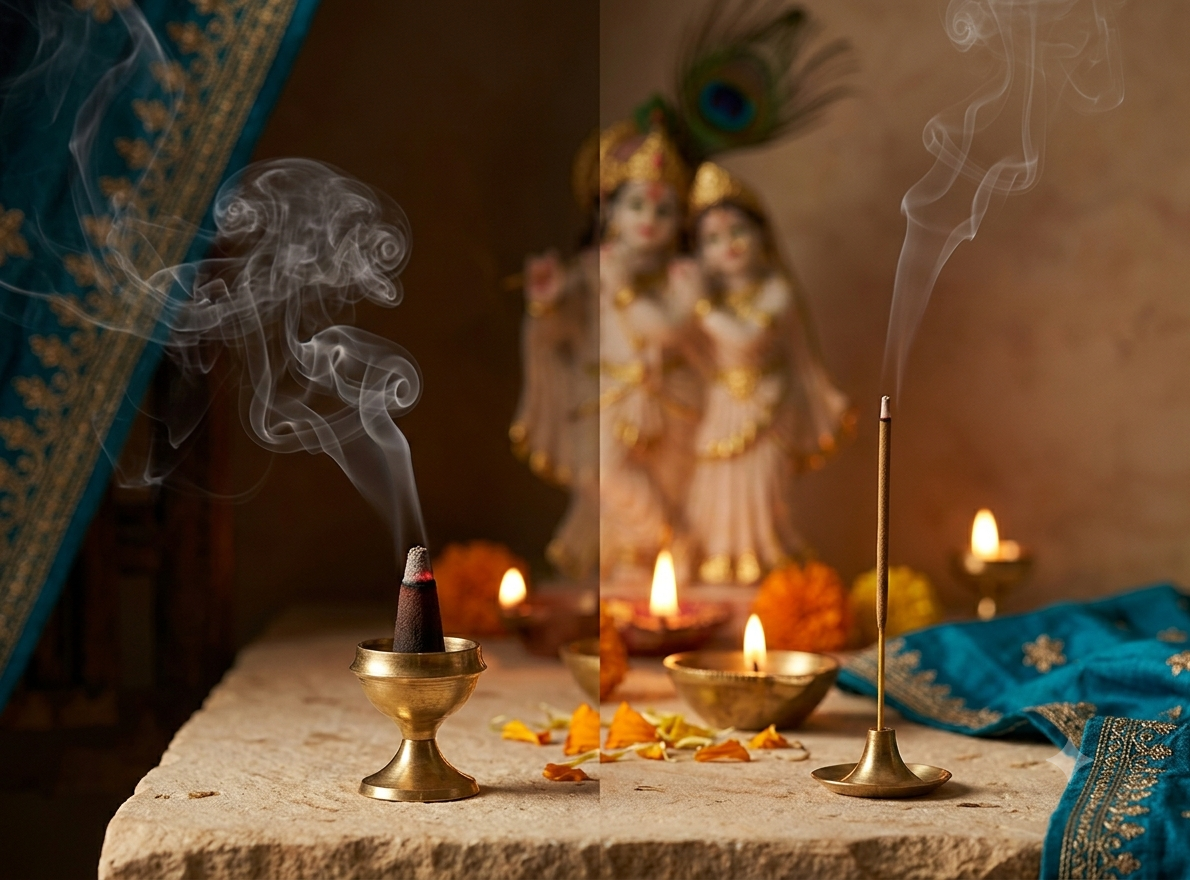
Agarbatti is a thin bamboo stick coated with a paste of charcoal, natural gums, and fragrant oils or herbs. It burns slowly from one end, releasing a steady, gentle stream of smoke — usually for 35–45 minutes.
Dhoop, on the other hand, has no bamboo core at all. It’s typically shaped as a solid cone, coil, or stick made purely from a compressed mixture of herbs, resins (like gugal and loban), and natural binders. Because there’s no stick to burn alongside it, dhoop tends to release a much thicker, denser smoke in a shorter burn time — usually 10–20 minutes for a cone.
This structural difference is really the root of everything else — burn intensity, fragrance strength, and traditional use all follow from this one distinction.
Why the Smoke Itself Matters in Puja
In Vedic and Agamic puja traditions, dhoop (offering fragrant smoke) is considered a distinct step from the fragrance of agarbatti, even though both involve incense. Dhoop is traditionally associated with purification of the space — its denser smoke is meant to fill a room fully, almost like a ritual cleansing, before or during more elaborate ceremonies. Agarbatti’s thinner, longer-lasting smoke is better suited to sustained, quiet moments — daily aarti, meditation, or simply keeping a gentle fragrance present through the day.
Neither is “better” — they’re built for different jobs.
When to Use Agarbatti
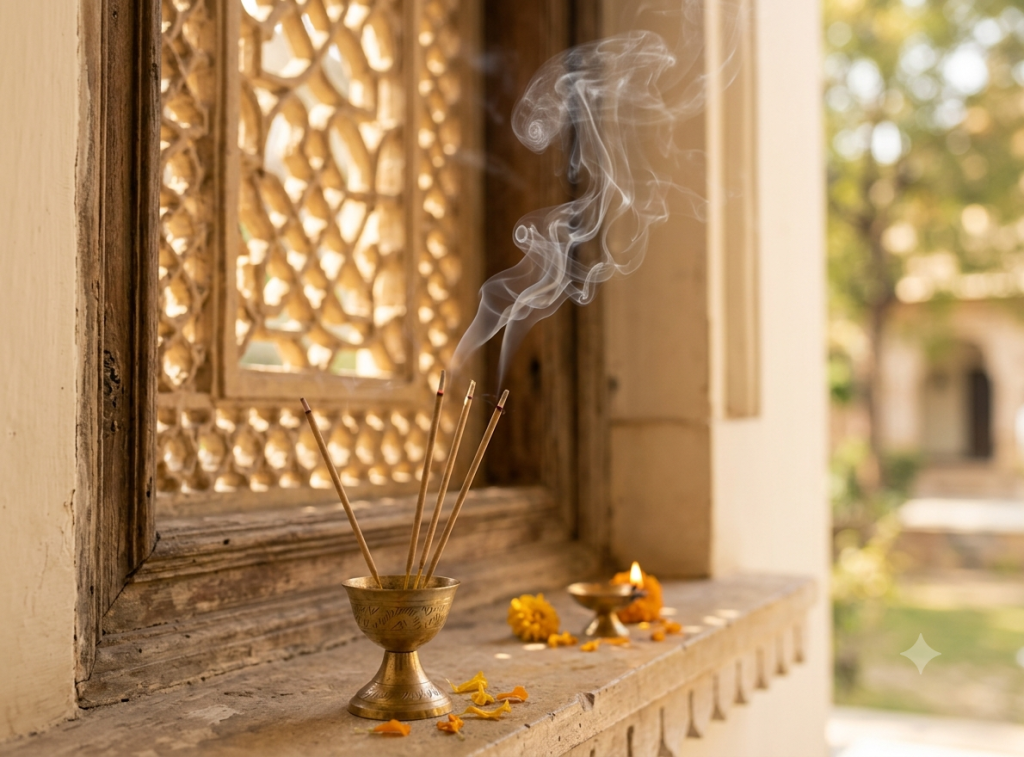
- Daily puja and aarti — its slow, steady burn matches the rhythm of a regular routine
- Small spaces or apartments — the lighter smoke is less overwhelming in closed rooms
- Meditation and japa — a longer burn time means you don’t need to relight mid-session
- Everyday shringar of the mandir — keeping a gentle fragrance present through the day without needing constant attention
When to Use Dhoop
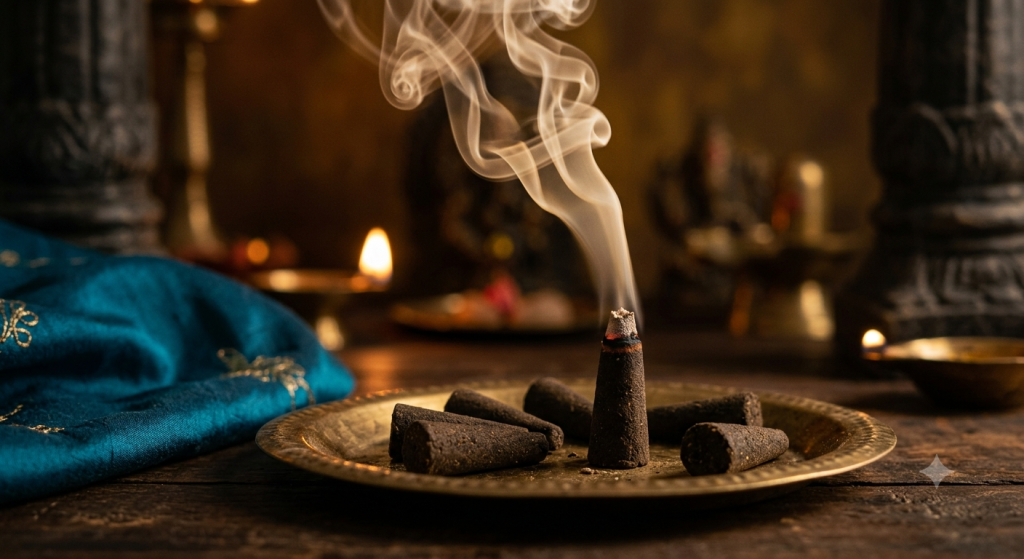
- Festivals and special occasions — Diwali, Navratri, Kartik month, or any celebration that calls for a fuller sensory presence
- Havan and elaborate rituals — dhoop’s denser smoke is traditionally considered more appropriate for formal ceremonies
- Larger spaces — temple halls, big living rooms, or outdoor puja setups where a thin agarbatti’s smoke would simply dissipate too quickly
- Purification before puja — many households light dhoop briefly before beginning an important ritual, to “clear” the space first
Can You Use Both Together?
Yes, and in many Vrindavan households, this is actually the norm — dhoop is lit briefly at the start of an important puja to purify the space, and agarbatti continues burning through the rest of the ritual for sustained fragrance. Think of dhoop as the opening gesture and agarbatti as the steady companion that follows.
A Quick Way to Decide
If you’re setting up puja items for a home temple and aren’t sure where to start: agarbatti should be your everyday staple, and dhoop cones are worth keeping on hand specifically for festivals, guests, or whenever the occasion feels like it deserves a fuller offering. Most devotees eventually keep both — not as a either/or choice, but as two tools for two different moods of devotion.
Choosing Quality in Either
Whether you pick dhoop or agarbatti, the same quality markers apply: look for natural resin and herb bases rather than “fragrance only” labels, a smooth and layered smell rather than something sharp or one-note, and — where possible — sourcing from makers who understand the ritual context, not just the retail one. This is especially true if you’re looking for the best incense for Krishna puja, where the fragrance itself is considered part of the offering, not just ambience.
From Our Home to Yours
At Keli Kunj, we carry both traditions side by side — our agarbatti range for daily devotion, and our Panchgavya Dhoop line for the occasions that call for something fuller. Both are made following the same principle: fragrance that belongs in a Vrindavan puja, not just on a shelf.
Explore our Dhoop & Agarbatti collection and find the right companion for whatever moment of devotion you’re preparing for.
Radhe Radhe.
Generally yes — dhoop produces a denser, more concentrated smoke because it has no bamboo stick diluting the burn. This makes it feel more intense in a shorter time, which is why it’s traditionally reserved for special occasions rather than daily, prolonged use.
It can, but many households reserve it for select days or occasions since its thicker smoke can feel overwhelming in small, regularly closed spaces if used daily. Agarbatti’s gentler burn is generally better suited for everyday routine.
Agarbatti is usually the better fit for smaller or well-sealed spaces, as its lighter, slower-releasing smoke is less likely to set off smoke alarms or feel overpowering. Dhoop is better suited to larger, more ventilated rooms.
Both are considered fragrant smoke offerings in puja, but dhoop is traditionally linked more closely to purification of the space itself, while agarbatti is associated with sustained, ongoing fragrance during worship. Many rituals use both, each for its specific role.
Panchgavya Dhoop is made using the five sacred cow-derived ingredients (panchgavya) combined with traditional herbs and resins, considered especially auspicious in Vedic ritual practice and commonly used during havans and important poojas.